Choosing designer wallpaper can feel overwhelming.
With thousands of colours, patterns, materials, and styles available, it’s easy to fall into the trap of asking, “Which wallpaper pattern should I buy?” before asking a much more important question:
What do I want this room to feel like?
This is one of the biggest differences between decorating a room and designing one.
Professional interior designers rarely begin by choosing a pattern they like. Instead, they think about atmosphere first. They consider how the room will be used, how people will move through it, how natural light changes throughout the day, and how every design decision contributes to the overall experience of living in the space.
The right designer wallpaper doesn’t simply make a room more beautiful. It can make a bedroom feel more restful, a living room more welcoming, a hallway more memorable, or a dining room more intimate. It becomes part of the architecture of the home, influencing how a space is experienced every single day.
This guide will walk you through the same process many designers use when selecting wallpaper, helping you move beyond trends and choose a design you’ll love for years to come.

Step 1: Start by Thinking About the Room
One of the most common mistakes people make is choosing wallpaper before understanding the room itself.
Interior designers work differently. Before looking at wallpaper collections, they spend time analysing the room.
Questions they ask include:
- What is this room used for?
- How much time will people spend here?
- What activities happen here?
- How should the room feel?
- Where is the natural focal point?
- What architectural features already exist?
The answers shape decisions that follow.
A wallpaper that works beautifully in a dramatic dining room may feel completely out of place in a bedroom designed for rest.
Likewise, a subtle textured wallpaper that creates elegance in a hallway may disappear in a large open-plan living space where a stronger focal point is needed.
Rather than asking which wallpaper is the most beautiful, ask which wallpaper is most beautiful and appropriate for the room.
Interior designers always consider:
- The function of the room
- Existing architecture
- Furniture layout
- Natural light
- Traffic flow
- Desired atmosphere
When these elements are understood first, wallpaper becomes much easier to choose.

Step 2: Decide How You Want the Room to Feel
Professional interior designers rarely begin with colours or patterns. Instead, they start by thinking about atmosphere. Great interior design is emotional before it is visual. Long before we notice individual details, we instinctively respond to how a room makes us feel.
Every wallpaper creates a different mood. Forest themed wallpaper designs are calming and restorative, landscape murals create a sense of escape, industrial wall murals add a modern edge to interiors, and metallic wallpapers offer quiet luxury.
Rather than asking, “Which wallpaper do I like?”, ask yourself, “How do I want this room to feel?” Once you’ve answered that question, choosing the right wallpaper becomes much easier, helping you create a space you’ll enjoy living in for years to come.
Ask yourself:
- Should this room feel relaxing?
- Welcoming?
- Creative?
- Sophisticated?
- Cosy?
- Dramatic?
- Airy?
- Luxurious?
Once you’ve answered those questions, you’ve already eliminated hundreds of unsuitable wallpaper options.

Step 3: Work With the Architecture
One of the biggest differences between decorating and interior design is understanding the architecture of a room.
Before choosing a wallpaper, professional designers spend time looking at the space itself. They consider its proportions, natural focal points, and architectural features, using these as a guide for where wallpaper will have the greatest impact.
Every room already has an area that naturally draws the eye. This could be:
- A fireplace
- A bed
- A staircase
- Large windows
- Built-in shelving
- A dining table
- A sofa
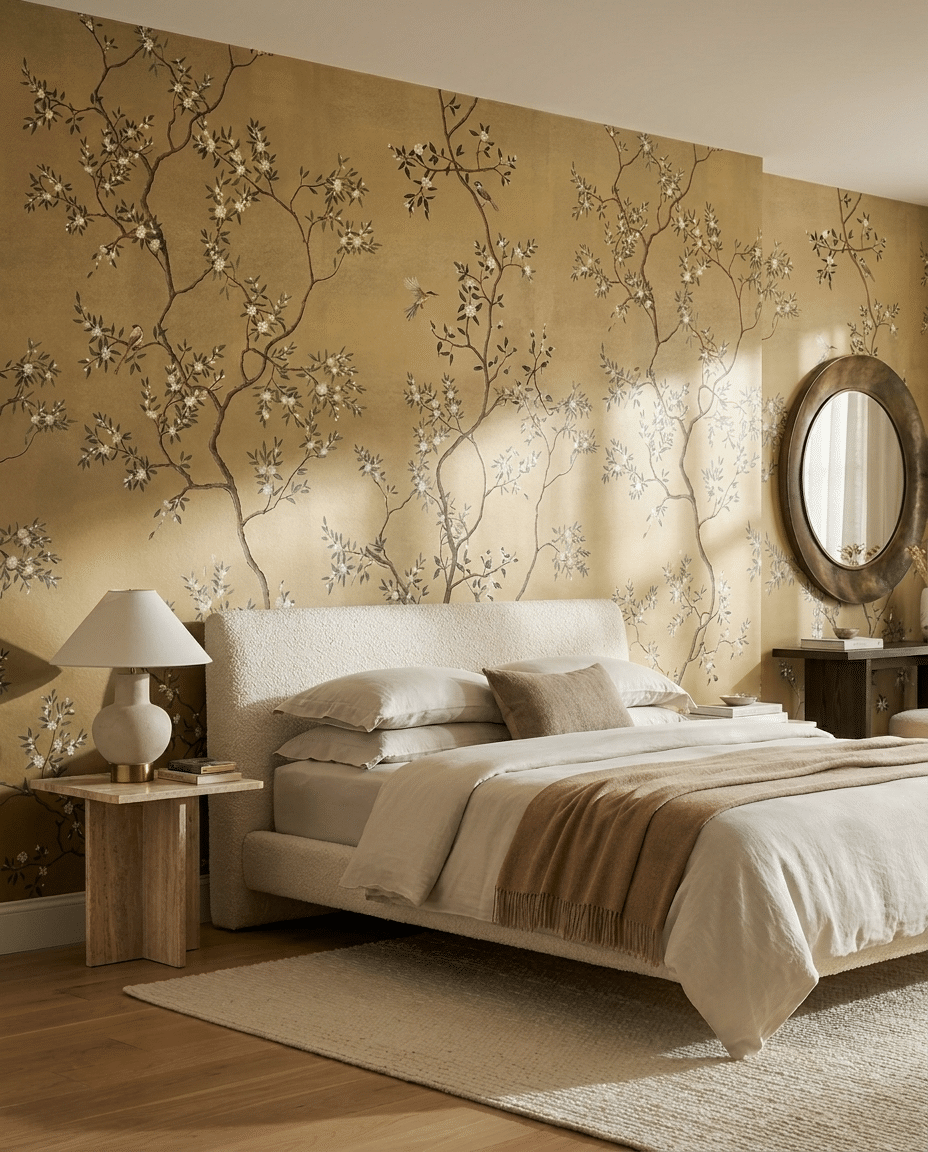
Wallpaper is most effective when it enhances these existing focal points rather than competing with them. A panoramic mural behind a bed helps frame the sleeping area, while wallpaper behind a sofa anchors the seating space and creates a natural backdrop. In a hallway, a feature wall at the end of a corridor can draw the eye forward and add a sense of depth.
A common mistake is choosing wallpaper simply because a wall feels empty. Instead, ask yourself which wall deserves to be highlighted. By working with the room’s architecture rather than against it, your wallpaper will feel intentional, balanced, and naturally integrated into the overall design.

Step 4: Let Natural Light Make Some of the Decisions
Natural light has a significant influence on how wallpaper looks and feels, which is why interior designers always consider it before making a final decision.
The same wallpaper can appear completely different depending on the orientation of a room, the time of day, and the amount of daylight it receives. Colours often appear cooler in north-facing rooms, while south-facing spaces tend to bring out warmer tones. Morning light can reveal subtle details that become softer and more muted by evening.
Rather than trying to fight these natural changes, work with them. Bright rooms can often carry richer colours and larger-scale murals, while darker spaces may benefit from warmer neutrals or lighter botanical designs that help maximise available light.
Before choosing your wallpaper, consider:
- Which direction does the room face?
- How much natural light does it receive?
- Does the room feel bright and open or darker and more enclosed?
- Will the space be used mostly during the day or in the evening?
Taking these factors into account will help you choose a wallpaper that looks beautiful throughout the day, not just under showroom lighting.

Step 5: Choose Colour According to Atmosphere, Not Fashion
Colour is one of the most powerful tools in interior design. It influences how a room feels long before we notice individual pieces of furniture or decorative details, which is why professional designers choose colour based on atmosphere rather than trends.
While new colour palettes emerge every year, the homes that continue to feel timeless are rarely designed around what’s fashionable. Instead, they use colour to support the purpose of the room. Warm neutral murals create a welcoming and comfortable environment, green wallpapers strengthen our connection to nature, blue wallcoverings encourage calm, while richer tones such as forest green or charcoal introduce intimacy and depth.
Rather than asking, “What’s the colour of the year?”, ask yourself, “Which colours support the way I want to live?” This simple shift in thinking will help you create interiors that feel personal and remain enjoyable for years to come.
Colour ideas by mood
For a calm and restful atmosphere
- Sage green
- Soft blue
- Warm ivory
- Stone
For warmth and comfort
- Taupe
- Sand
- Clay
- Mushroom
For drama and depth
- Forest green
- Charcoal
- Navy
- Deep burgundy
For timeless elegance
- Olive
- Soft grey
- Warm white
- Rich neutrals
The most successful colour palettes are those that enhance your everyday experience of a room, creating an atmosphere you’ll enjoy long after seasonal trends have passed.

Step 6: Think About Scale Before You Think About Pattern
When choosing wallpaper, it’s easy to focus on the pattern itself, but professional interior designers know that scale is just as important. The size of a design can dramatically influence how a room feels, often even more than the motif or colour palette.
A large panoramic mural creates an immersive experience, drawing the eye across the wall and making the room feel more architectural. Medium-scale patterns offer a balance between statement and subtlety, adding character without dominating the space. Smaller repeating designs create texture and rhythm, making them particularly well suited to traditional interiors or rooms where furniture and architectural details already take centre stage.
One of the biggest misconceptions is that small rooms need small patterns. In reality, a large-scale mural can often make a compact room feel more spacious by creating depth and perspective, while very small, busy patterns can sometimes make walls feel more enclosed.
The key is to choose a scale that complements both the proportions of the room and the atmosphere you want to create.
As a general guide:
Large-scale murals work well in:
- Living rooms
- Bedrooms
- Dining rooms
- Hallways
- Commercial interiors
Medium-scale patterns suit:
- Family living spaces
- Home offices
- Kitchens
- Flexible multi-purpose rooms
Small-scale designs work particularly well in:
- Traditional interiors
- Cloakrooms
- Heritage homes
- Rooms with extensive architectural detailing
Rather than asking whether you prefer one pattern over another, consider how its scale will interact with the room. Choosing the right proportions will help the wallpaper feel balanced, intentional, and perfectly suited to the space.

Step 7: Match the Wallpaper to Your Interior Style—Not the Other Way Around
Designer wallpaper should complement the character of your home, not compete with it. One of the most common decorating mistakes is choosing a wallpaper first and then trying to redesign the entire room around it. Professional interior designers usually take the opposite approach. They begin by considering the existing architecture, furniture, materials, and overall style of the space before selecting a wallpaper that enhances those qualities.
This doesn’t mean everything has to match perfectly. In fact, the most interesting interiors often combine different influences. The goal is to create a sense of harmony, where the wallpaper feels like a natural extension of the room rather than an isolated feature.
For example, a Scandinavian-inspired home might suit soft botanical designs, muted landscapes, or subtle textural wallpapers that reinforce its calm, nature-inspired aesthetic. Contemporary interiors pair beautifully with abstract wall murals, oversized artistic compositions, or minimalist textured wallcoverings, while traditional homes are enhanced by timeless chinoiserie, painterly florals, or heritage-inspired botanical designs that complement original architectural details.
Instead of recreating a room you’ve seen online, think about what already makes your home unique. The right wallpaper should strengthen your existing style and help create a home that feels authentic to you.
Designer wallpaper ideas for different interior styles
Modern
Stucco wallpapers, abstract murals, ombre wallpapers, and restrained colour palettes complement modern interiors by adding depth with minimal decoration.
Scandinavian
Nature-inspired murals, light wood tones, soft greens, and understated botanical designs help create the calm, functional atmosphere Scandinavian interiors are known for.
Traditional
Chinoiserie wallpapers, painterly florals, heritage-inspired botanicals, and warm colour palettes pair beautifully with period features and classic furniture.
Eclectic
Abstract murals, bold landscapes, rich colours, and layered decorative details allow eclectic interiors to express personality while maintaining a thoughtfully curated feel.
The most successful interiors don’t follow a formula—they reflect the people who live in them. Choosing wallpaper that works with your home’s existing style will create a space that feels balanced, cohesive, and timeless.

Step 8: Consider the Room as a Whole
One of the biggest differences between decorating and interior design is that designers never think about wallpaper in isolation. Instead, they consider how it will work with every other element in the room, from the flooring and furniture to the lighting and soft furnishings.
The goal isn’t to make everything match perfectly. In fact, the most inviting interiors are built on harmony rather than uniformity. A wallpaper’s colours might be subtly echoed in cushions, curtains, or artwork, while its overall mood is reinforced through the choice of materials and finishes.
Natural materials are particularly effective alongside designer wallpaper. Timber, stone, linen, wool, leather, marble, and brushed brass all add texture and depth, helping create interiors that feel warm, layered, and timeless.
Lighting is equally important. Wallpaper changes throughout the day as natural light shifts, revealing different colours and details from morning to evening. Layering ceiling lights, wall lights, table lamps, and floor lamps allows the wallpaper to take on different qualities, creating a space that feels inviting at any time of day.
Interior designers often create cohesion by repeating wallpaper colours through:
- Upholstery
- Cushions
- Curtains
- Rugs
- Artwork
- Decorative accessories
- Lighting finishes
These subtle connections help create interiors that feel balanced, cohesive, and thoughtfully designed, allowing the wallpaper to become a natural part of the room rather than a feature that sits apart from it.

Step 9: Choose Wallpaper You’ll Love in Years to Come
One of the hallmarks of good interior design is longevity. While trends come and go, the most beautiful homes are designed around personal taste rather than what’s currently popular. Interior designers rarely ask whether a wallpaper is fashionable—they ask whether it will still feel right years from now.
Wallpaper becomes part of everyday life. It’s there when you wake up in the morning, unwind in the evening, gather with family, or welcome guests into your home. Because you’ll see it every day, it’s worth choosing a design that creates a lasting emotional connection rather than one that simply reflects the latest trend.
This is why timeless styles continue to endure. Botanical wallpapers remain popular because our connection to nature never goes out of fashion. Landscape murals evoke a sense of openness and escape, while chinoiserie designs have been admired for centuries thanks to their artistry and craftsmanship. These designs feel relevant not because they’re trendy, but because they create atmospheres people continue to enjoy year after year.
Before making your final decision, take a moment to imagine living with the wallpaper long-term. If it still feels like something you’ll love in five or even ten years’ time, it’s probably the right choice.
Before making your final decision, ask yourself:
- Would I still enjoy this design in five years?
- Does it suit my home rather than current trends?
- Does it create the atmosphere I want?
- Will it work as my furniture and décor evolve?
- Does it reflect my personal style?
Choosing wallpaper with longevity in mind helps create a home that feels authentic, timeless, and enjoyable to live in for years to come.

Designing a Home You’ll Love Living In
Choosing designer wallpaper is about much more than selecting a pattern that catches your eye. As you’ve seen throughout this guide, every decision. From considering the atmosphere you want to create and the architecture of the room to understanding colour, scale, and natural light, plays a role in creating an interior that feels both beautiful and functional.
The most memorable homes aren’t built around trends or copied from social media. They’re thoughtfully designed to reflect the people who live in them. The wallpaper you choose should enhance your daily routines, complement your home’s character, and create spaces that feel welcoming, comfortable, and uniquely yours.
Whether you’re drawn to a calming botanical mural, a dramatic landscape, a timeless chinoiserie design, or a subtle textured wallcovering, the best choice is one that supports the way you want to live rather than simply following what’s fashionable.
Ultimately, designer wallpaper is more than a decorative finish. It has the power to define the atmosphere of a room, highlight its architecture, and bring personality to every corner of your home. By choosing with intention rather than impulse, you’ll create interiors that not only look beautiful on the day they’re installed but continue to feel inspiring for years to come. If you’re unsure where to start, don’t hesitate to reach out to our team—we’re always here to help you find the perfect match for your space.
Because the best homes aren’t designed to impress—they’re designed to be lived in.


